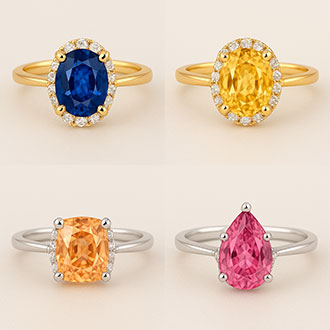
The Allure of Blue Sapphires
Sunday, November 2, 2025
The Allure of Blue Sapphires
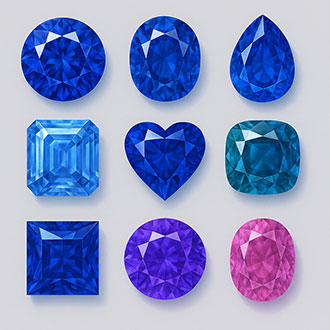
The Allure of Blue Sapphires and the Rainbow of Corundum Colors
Sapphires, among the most cherished gemstones in the world, captivate gem enthusiasts, collectors, and jewelers alike with their brilliance, durability, and rich symbolism. While they are often associated with the color blue, sapphires belong to the broader mineral family of corundum, which comes in nearly every color of the rainbow. Among these, blue sapphires remain the most famous and widely recognized. This essay explores the fascinating world of blue sapphires — their formation, color grading, treatments, origins — while also delving into the many other remarkable hues sapphires can take.
Blue Sapphire: The Classic Beauty
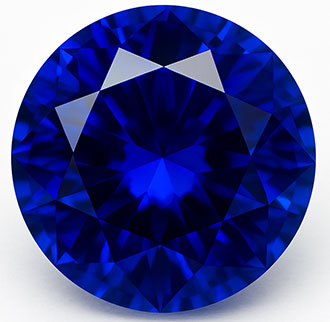
Royal Blue Round Sapphire
Blue sapphire is considered a primary color gemstone, meaning its most valuable and purest form is a vivid, untainted blue. The color in blue sapphires arises from trace elements of titanium and iron within the crystal structure. The greater the concentration of these elements, the more intense the blue hue becomes. This increase in saturation plays a vital role in determining the stone's value — deeper, richer blues generally command higher prices, as long as the tone remains vibrant and not too dark.
In terms of color purity, blue sapphires often feature secondary hues such as violet, purple, or green. Purple and violet can add a velvety or royal depth to the stone, enhancing its visual appeal. However, greenish undertones are typically seen as detrimental to the value of a blue sapphire. In fact, nearly all blue sapphires display some green component when viewed from certain angles due to their dichroic nature. It is the responsibility of the gem cutter to orient the stone in a way that minimizes this green influence in the final, face-up view.
Dichroism and the Role of Cutting
One of the most intriguing characteristics of blue sapphires is their dichroism — they exhibit different colors when viewed from different angles. When viewed in one direction, they may appear a vivid blue to violet-blue, while in another direction, a slightly greenish-blue may emerge. Because of this, the cutter’s skill is essential not just for shaping the gemstone, but for orienting it properly to showcase the most desirable color. A well-cut sapphire can amplify its depth, brightness, and beauty, hiding less desirable color zones or inclusions from the viewer's eye.
Cutting decisions are often made with the goal of preserving weight and optimizing face-up color rather than adhering to standardized shapes. As a result, calibrated sizes — common in diamonds — are not typical in sapphires, especially stones over one carat.
Inclusions and Internal Characteristics
Perfectly clean blue sapphires — especially large ones — are extremely rare. Most contain inclusions, which are natural features within the stone. However, not all inclusions diminish a sapphire’s value. In fact, some inclusions — especially delicate silk (fine rutile needles) — can increase desirability if they contribute to the gem’s luster or provide evidence that the stone has not been heat-treated.
These silk inclusions scatter light, contributing to the soft, velvety glow that many collectors desire in fine sapphires. When dense, however, silk can obstruct light and reduce brilliance. Additionally, certain inclusions are valuable as diagnostic tools. If a sapphire has intact silk or fluid inclusions, it is often a sign that it is untreated, since heat treatment would typically break down these internal features.
Heat and Diffusion Treatments
The vast majority — over 90% — of all blue sapphires on the market today have undergone heat treatment. This process improves color and clarity by eliminating undesirable tints, reducing inclusions, and enhancing saturation. Heat treatment is accepted in the industry as long as it is disclosed and does not involve additional chemical diffusion.
More controversial is the diffusion treatment method, in which elements such as beryllium are added during the heating process to alter the color of lower-quality corundum. These diffusion-treated stones often display vibrant color only on the surface, while the interior remains colorless or pale. Because this treatment significantly alters the stone’s natural composition and may result in artificial-looking gems, diffused sapphires are worth far less and must be clearly disclosed to buyers.
Geographic Origins of Blue Sapphires
Blue sapphires are mined in many parts of the world, with each source producing gems with unique characteristics. Kashmir sapphires from India are legendary for their rich cornflower blue hue and velvety appearance. Though mines in the region are largely depleted, these sapphires remain among the most coveted in the world.
Myanmar (Burma) produces sapphires with deep royal blue hues and exceptional clarity, while Sri Lanka (Ceylon) is known for its lighter, more brilliant blue stones. Madagascar has emerged in recent decades as a major producer, offering a range of blue sapphires often comparable to Sri Lankan material. Other notable sources include Thailand, Australia, Tanzania, and Montana (USA) — each with distinct geological influences on the sapphire’s color and clarity.
Beyond Blue: The Many Colors of Sapphire
While blue may be the most famous, sapphires come in a stunning variety of colors, all stemming from the same mineral — corundum. The only exception is red corundum, which is classified separately as ruby.
Here are some other sapphire varieties:
- Pink Sapphire: Often mistaken for light rubies, pink sapphires range from pastel to hot pink. Chromium is the primary coloring agent.
- Yellow Sapphire: Ranging from pale lemon to vibrant golden, these stones are colored by trace amounts of iron.
- Green Sapphire: Rare and generally less prized than other colors, though their uniqueness appeals to collectors.
- Padparadscha Sapphire: A rare and valuable pink-orange hue, named after the lotus flower. It is one of the most sought-after non-blue sapphires.
- White Sapphire: Colorless and transparent, often used as a diamond alternative.
- Purple and Violet Sapphires: Colored by vanadium, these stones are sometimes included under the broader sapphire category.
- Orange Sapphires: Vivid and bold, they are usually heat-treated to enhance their color.
Conclusion
Blue sapphires embody the pinnacle of elegance and tradition in the gemstone world, admired for their depth, durability, and historical prestige. Their rich hue, influenced by trace elements and enhanced through careful cutting, continues to enchant collectors and designers alike. While blue remains the classic, the full spectrum of sapphire colors — from pink to yellow, green to white — demonstrates the versatility and natural wonder of the corundum family.
Whether untreated and velvety or heat-enhanced for brilliance, sapphires reflect the enduring beauty of the earth’s geological treasures. For both gemstone enthusiasts and first-time buyers, understanding the intricacies of blue sapphires and their colorful counterparts opens the door to appreciating one of nature's most remarkable creations.